How to win the battle against thrips
Brown SHRIVELLED LEAVES? could be thrips!
All of a sudden your plants look really bad. They get crispy edges, have weird little marks on random places and just look really sad overall. You assume you forgot to water them. Or was it maybe too sunny? So you water them more, and maybe you even place them on a diffferent spot in your home (yikes!!). But it keeps getting worse, and now other plants begin to visibly struggle too. What is going on!?
Read this blog for all tips, tricks and troubleshoots, and your plants will thrive again. But you have to act fast!
FACT: THRIPS ARE THE WORST
Believe me when i say, having a thrips infestation is the WORST for your plants. They do the most damage really quick, because they are tiny, clever as hell and can fly, so they easily spread to other plants nearby. And with clever I mean, EINSTEIN BOSS LEVEL clever. First of all, they hide on the bottom parts of your leaves, sometimes even only on the leaves near the soil at first, so when you spot the first damage from afar you already have a huge infestation going on. Secondly, they are in all parts of your plant, so getting rid of them is really really hard. Let me explain.
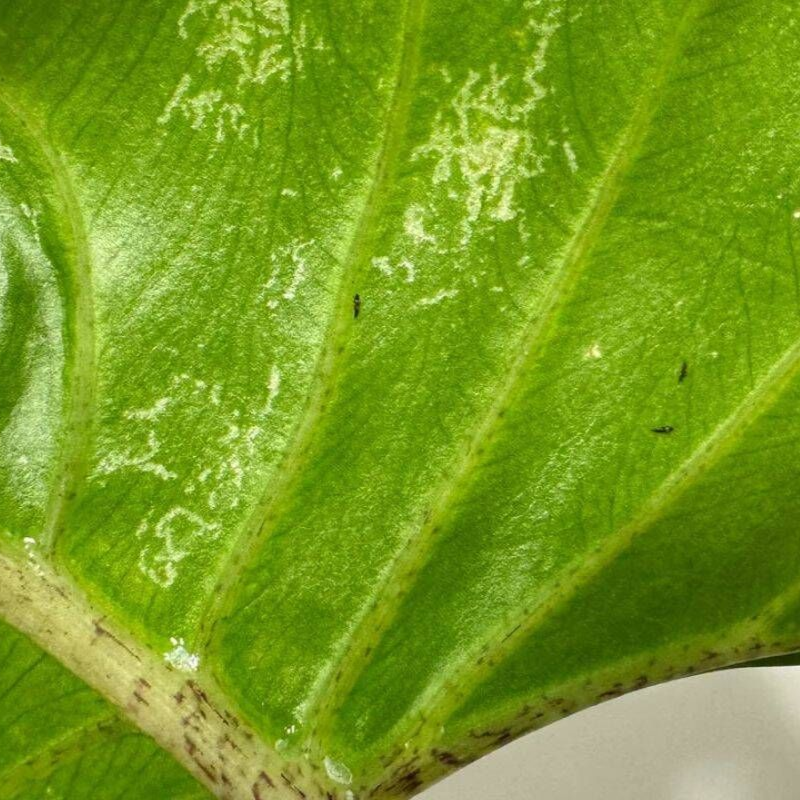
Grown up thrips are around 2-3 mm long and thin. They can be grey with a few tiny black stripes, or black with a white stripe in the middle. Pro tip; use a lamp to spot them, or turn the leaf against the sunlight.
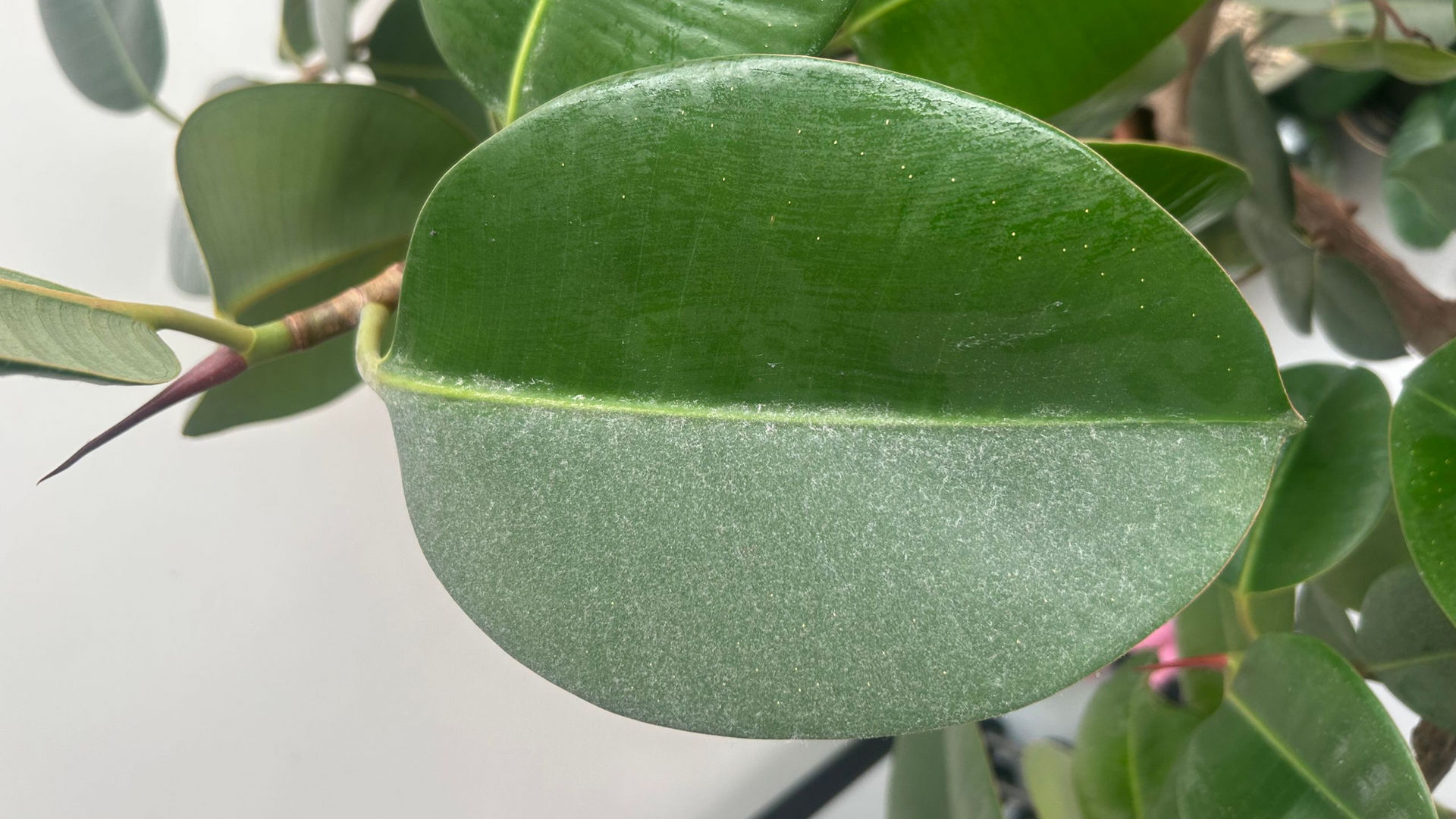
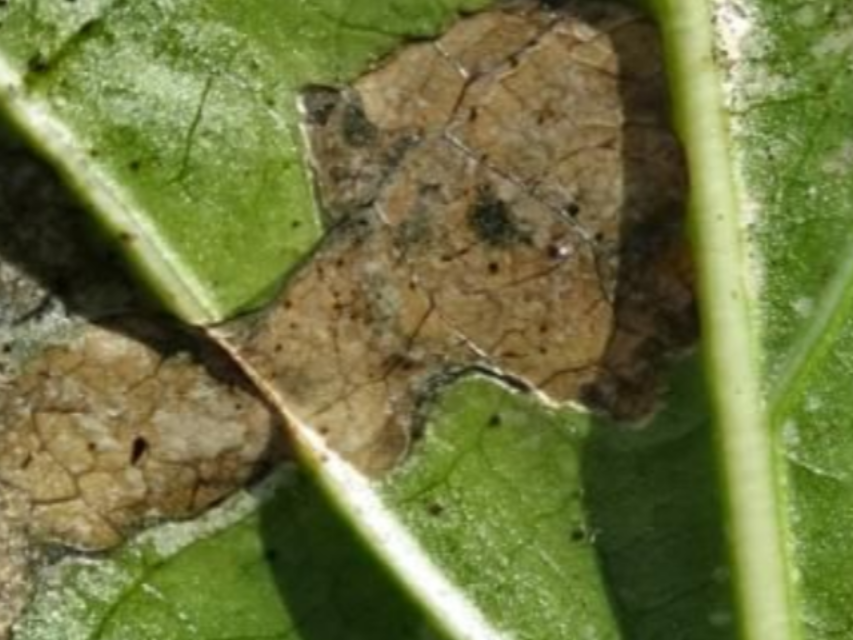
Thrips feed on the juices of your gorgeous plants, so when you look closely you will see light green or brown spots on your leaves. Also, you can often spot black little specs (photo -->), which are little thrip poopsies. They prefer thin leaves like calathea, pothos and monstera, because it is easier to suck the nutrition from the leaves. But you can find them anywhere, even on cacti and succulents. When the leaves are thicker it will take some time to notice damage, but you will see it clearly on the bottom of the leaves. So turn those leaves!
After feeding on the juicy leaves, the thrips lay their eggs ín the leaves. And then the 'magic' happens; when the larvae (white, thin and a little smaller than the grown ups) come out they travel down to the soil to turn into grown ups, safe and snug, and away from sprays you might have used. And this is why it is so hard to break the cycle! Because when the spray is evaporated, the larvae in the soil will reappear and the whole process starts again. Ugh!
HOW TO BREAK THE CYCLE
Like I said, thrips are found in three parts of your plant --> ón the leaves, ín the leaves, and in the soil. So to get rid of thrips it is important to treat ALL three aspects, and you need to repeat this process several times.
First step is to treat the leaves. There are several good sprays on the market, like this one. You can also choose to use natural enemies, which is my preference. They do the work for you for a whole month! You buy little bags which you then hang in your affected plant, and the ones around it, and the only thing you have to do is mist your plants every now and then.
For the larvae in the soil you can use 'aaltjes'. You mix this 'powder' (a gazillion eggs of the nematode), with water and pour it on the soil. You then get a war at micro level, as the larvae of the nematodes attack and eat the thrips larvae. In combination with either a spray or the natural enemies this works wonders!
A
final pro tip
(don't shoot the messenger): when you are not really attached to the plant, and you see grown up thrips on every leaf, it might be best to
throw it out
to save your other plants. And I don't give this advice lightly. But I have lost half of my plant collection (over 65 plants) due to being too attached and trying to save them all for too long... You can also try to save a little cutting, or cut your plant shorter to increase the chance of getting rid of the thrips. Be sure not to walk through your whole house with the infested plant, but cut it on the spot and put it in a garbage bag. Good luck!!
Green greetings,
Studio Wendel